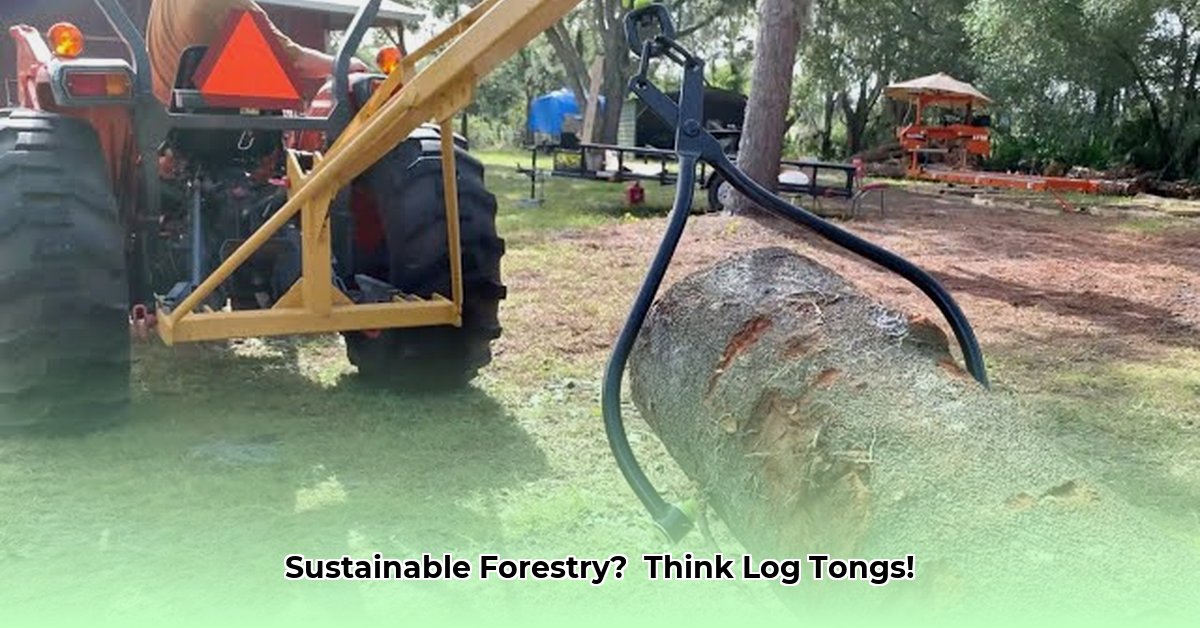
Choosing the right equipment is crucial for efficient and environmentally friendly logging. Log tongs for tractors offer a sustainable alternative to traditional methods, minimizing damage to the land and improving overall operational efficiency. This guide provides a comprehensive overview of selecting, using, and maintaining log tongs effectively, enhancing both productivity and environmental responsibility. For more powerful options, consider a tractor-mounted log splitter.
Understanding Log Tongs
Log tongs are specialized attachments designed to grip and lift logs, streamlining the harvesting process. Unlike other methods, they minimize soil compaction and habitat disruption, preserving the forest floor's health. The selection process depends on several key factors, including log size, terrain, and tractor capacity.
Types of Log Tongs
Several types of log tongs cater to various needs:
Grapple Tongs: Versatile and capable of handling a wide range of log sizes and weights, making them ideal for general-purpose logging. Think of them as the all-around choice for diverse logging needs.
Swivel Tongs: Offer increased maneuverability, perfect for tight spaces and precise log placement, especially beneficial in challenging terrain. Their flexibility in placement makes them particularly useful.
Fixed-Jaw Tongs: Suited for smaller logs and specific applications where a firm grip is essential. They offer simplicity and often a lower cost but lack the versatility of other types.
The type of wood also influences the choice. Hardwoods, being denser, require stronger tongs than softwoods. The tongs' strength and durability must match the operational demands. How do you determine which type best fits your needs? Consider the factors described in the next section.
Choosing the Right Log Tongs
Selecting the right log tongs involves careful consideration:
Tractor Capacity: The tractor's lifting capacity directly impacts the size and type of tongs you can use. Never exceed the recommended lifting capacity; safety is paramount. What is your tractor's maximum lift capacity? This determines the largest log you can safely handle.
Logging Operation Scale: Smaller operations might need only light-duty tongs, while larger operations benefit from heavier-duty equipment for larger logs. Does your operation involve harvesting a few trees or many? This influences your equipment choice.
Terrain: Rough terrain requires sturdier tongs adaptable to uneven surfaces and obstacles. Are your logging areas flat or hilly? This factors into your decision about tong sturdiness.
Here's a comparison table:
| Tong Type | Lifting Capacity (lbs) | Maneuverability | Ideal Use |
|---|---|---|---|
| Grapple Tongs | 500 - 10,000+ | Moderate | General purpose, varied log sizes |
| Swivel Tongs | 500 - 5,000 | High | Precise placement, tight spaces |
| Fixed-Jaw Tongs | 200 - 2,000 | Low | Smaller logs, specialized applications |
Safe Operation and Maintenance
Safety is paramount. Always:
- Inspect: Thoroughly check for damage before each use.
- Secure Attachment: Ensure a tight connection to the tractor's hydraulic system.
- Careful Grasping: Position tongs securely on the log, preventing slippage.
- Controlled Lifting: Lift smoothly and gradually, avoiding jerky movements.
- Safe Transport: Secure the log properly during transportation, avoiding overloading.
- Regular Maintenance: Lubricate, clean, and inspect regularly to extend the service life and ensure safe operation.
Regular maintenance is crucial for preventing costly repairs and downtime. Ignoring maintenance can lead to accidents and equipment damage.
Sustainable Practices with Log Tongs
Log tongs are integral to sustainable forestry. They minimize soil compaction compared to traditional methods, preserving soil health and reducing habitat disruption. Careful operation minimizes the environmental impact, and selective logging techniques enhance preservation.
Cost-Benefit Analysis
The initial investment is significant, but the long-term benefits—increased efficiency, reduced labor costs, and lower environmental impact—make it worthwhile. The reduced ground disturbance limits environmental damage, potentially reducing remediation costs and fines. Weigh these factors carefully when making a purchasing decision.
Conclusion
Log tongs are a valuable asset for sustainable forestry, offering a balance between efficiency and environmental responsibility. By understanding the different types, choosing the right one for your needs, and prioritizing safe operation and maintenance, you can significantly improve your logging practices and contribute to a more sustainable future. Remember that responsible use and ongoing monitoring are key to minimizing environmental impact while maximizing benefits. The initial investment in log tongs is offset by long-term gains in efficiency and reduced environmental impact.